
Font Size:

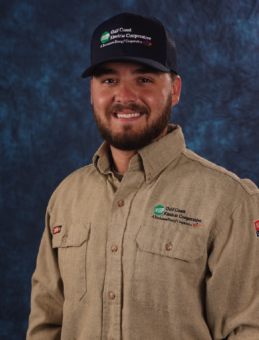
Grant Hathaway recently became a certified line technician through the Tennessee Valley Public Power Association’s Line Technician Apprenticeship Training Program.
In addition to four correspondence courses and three on-site climbing, construction, and operations classes, the training consists of four years of on-the-job training under a lead line technician.
The correspondence courses consist of independent study of math, electricity, and alternating current fundamental principles, which are the groundwork for understanding the hows and whys of the profession.
Students learn the basic tools and equipment used in everyday operations and applications, such as stringing and sagging wire, underground distribution systems, transmission and distribution line maintenance, transformer connections, meter applications, substation operations, and phasing and measuring voltage and current.
The three laboratories enable students to apply the knowledge learned from the correspondence units.
Participants learn basic knots, safe climbing techniques, and pole-top rescue—skills necessary for overhead line construction.
They build and frame lines according to specifications and learn grounding and preparation of stress cones for underground cables. Effective job briefing and basic troubleshooting steps for overhead and underground systems are demonstrated, as well as transformer banking, bucket truck pre-trip inspection, and bucket truck rescue.
The training involves both written and physical tests.
Although not all electric cooperatives require their line technicians to be certified, Gulf Coast Electric Cooperative (GCEC) management believes the training ensures the cooperative’s line technicians use proper construction techniques and follow safety procedures to prevent harm to themselves, co-workers and consumers.
“Gulf Coast Electric line workers are not promoted to the line technician position title until they are certified,” says GCEC Chief Operations Officer Francis Hinson. “Certification enhances not only employee knowledge but also safety practices.”