Starting Monday, September 15, 2025, our Wewahitchka office will be located in a temporary location (637 Highway 22) while our new headquarters office is constructed. We look forward to continuing to serve you during this transition. Thank you for your patience and support as we build a new, improved space...
Starting Monday, September 15, 2025, our Wewahitchka office will be located in a temporary location (637 Highway 22) while our new headquarters office is constructed. We look forward to continuing to serve you during this transition. Thank you for your patience and support as we build a new, improved space for our members! Same friendly staff, same reliable service - just across the street!
Disasters can happen anytime, anywhere. Unfortunately, no area is safe from the possibility of a disaster. And while disasters often cannot be predicted, measures can be taken to help your family cope should disaster strike. Living in an area prone to hurricanes, many of us are familiar with evacuations, as well as the temporary cut off of basic services such as gas, water, electricity, and telephones. And while we all hope not to have to experience the loss of these services, they are often the first services lost during a disaster. You can, however, make the situation more bearable for your family by making emergency preparations. Emergency kits are very important in times of disaster. They give you access to needed supplies and alleviate the stress of trying to locate items. In order to ensure that your family has a proper emergency kit should disaster strike your area, here is a list of the six basic areas that you should have stocked.
Water: Store one gallon of water per person per day (two quarts for drinking, two quarts for food preparations/sanitation). Keep at least a three-day supply of water for each person in your household. Water should be stored in plastic containers such as soft drink bottles. Avoid storing water in containers that will break or decompose.
Food: Store at least a three-day supply of non-perishable food. Select foods that require no refrigeration, preparation, or cooking, and little or no water. The following are some items that should be included in your food supply:
Ready-to-eat canned meats, fruits, and vegetables
Canned juices, milk, soup (if powdered, store extra water)
Staples — sugar, salt, pepper
High energy foods — peanut butter, jelly, crackers, granola bars, trail mix
Vitamins
Foods for infants, elderly persons, or persons on special diets


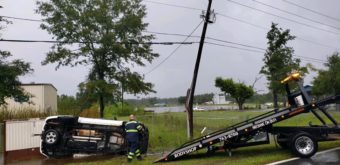 Disasters can happen anytime, anywhere. Unfortunately, no area is safe from the possibility of a disaster. And while disasters often cannot be predicted, measures can be taken to help your family cope should disaster strike. Living in an area prone to hurricanes, many of us are familiar with evacuations, as well as the temporary cut off of basic services such as gas, water, electricity, and telephones. And while we all hope not to have to experience the loss of these services, they are often the first services lost during a disaster. You can, however, make the situation more bearable for your family by making emergency preparations. Emergency kits are very important in times of disaster. They give you access to needed supplies and alleviate the stress of trying to locate items. In order to ensure that your family has a proper emergency kit should disaster strike your area, here is a list of the six basic areas that you should have stocked.